HoneyBees Control Service

What are Honey Bees, their Habits and Why We Need Honey Bee Control Services

Honey Bee Control Services - Honey bees are insects that are known for their ability to pro-duce honey and pollinate plants. They are social insects that live in colonies or hives, and they play an important role in the ecosystem. However, honey bee infestations can be a problem in certain situations, and in those cases, control services may be necessary.

Honey bees have a distinct physical appearance, with a yellow and black striped body and clear wings. They are typically smaller than other types of bees, such as bumblebees. Honey bees are active during the day, and they are most active when the weather is warm and sunny.

Honey bees live in colonies or hives, which can contain thousands of individual bees. The col-ony is ruled by a queen bee, who is responsible for reproducing and laying eggs. The other bees in the colony have specific roles, such as foraging for food, caring for the young, and protecting the colony.

Honey bees are known for their ability to produce honey, which is a sweet and sticky substance that is used as a food source. They also play an important role in pollination, which is the pro-cess of transferring pollen from one plant to another. This helps plants to reproduce and is es-sential for the growth and survival of many different types of plants.

However, honey bee infestations can be a problem in certain situations. Honey bees can be-come a nuisance when they establish hives in areas where they are not wanted, such as in build-ings, trees, or other structures. They can also pose a danger to people, as honey bees can be-come aggressive if they feel threatened.

In these situations, control services may be necessary to remove the honey bees and prevent them from returning. Control services typically involve the removal of the hive and the bees, as well as measures to prevent the bees from returning. These services should be performed by a professional pest control company that has experience dealing with honey bees.

It's important to note that honey bees are vital for our ecosystem and the environment. They have been facing a decline in population due to human activities, pesticides and climate change. The use of pesticides and other chemical treatments should be avoided as much as possible and we should instead focus on providing an environment that allows the bees to thrive.

In conclusion, honey bees are important insects that play an essential role in the ecosystem by producing honey and pollinating plants. But, infestations can be a problem in certain situations and control services may be necessary. Professional pest control companies can safely remove honey bees and prevent them from returning. While removing them, it's crucial to remember that they are vital for our environment and should be protected

Understanding the Impact of Honey Bees on Agri-culture & Environment

Honey bees play a vital role in agriculture and the environment. They are one of the most im-portant pollinators of plants, which means they help to fertilize plants by transferring pollen from the male parts of a flower to the female parts. This process allows plants to produce fruits, vegetables, and seeds.

Honey bees are responsible for pollinating about one-third of the world's food crops, including fruits, vegetables, nuts, and seeds. They also help to pollinate plants that are used for forage for livestock. This means that honey bees play a crucial role in food production, not just for hu-mans but also for animals.

Honey bees also have a positive impact on the environment. They help to maintain biodiversity by pollinating a wide variety of plants. This helps to support the entire ecosystem, including other insects, birds, and animals that depend on these plants for food and habitat.

However, the honey bee population has been declining in recent years due to factors such as habitat loss, pesticide exposure, and disease. This decline in honey bee populations can have a negative impact on agriculture and the environment. It can lead to reduced crop yields and a decline in biodiversity.

Therefore, it's important to protect honey bees and their habitats. This can be done by reducing the use of pesticides, creating habitats for bees, and practicing sustainable farming methods. Professional honey bee control services also play a vital role in protecting honey bees by using humane and safe methods for bee removal and control.

Safety Tips for DIY honey bee control services

Honey bee control can be a dangerous task, and it's important to take the necessary precautions to ensure your safety. Here are some safety tips for DIY honey bee control services:

  • Never attempt to remove a honey bee colony on your own if you are allergic to bee stings. Seek professional help instead.
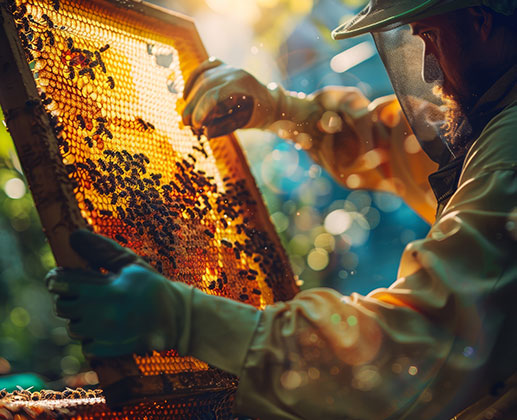
  • Wear protective gear, including a beekeeping suit with a veil, gloves, and boots.
  • Use a smoker to calm the bees before approaching the hive.
  • Use a hive tool to gently pry open the hive and remove the bees.
  • Do not use pesticides or other chemicals to control honey bees. These chemicals can be harmful to bees and the environment.
  • Always have an escape plan in case you are surrounded by bees.
  • Remove the bees at night when they are less active.
  • Be sure to relocate the bees to a safe location, such as a beekeeper's apiary.
  • Keep a first-aid kit handy in case of bee stings.

It's important to remember that honey bees are beneficial insects and should be treated with care. They play a vital role in pollinating plants and maintaining biodiversity. If you are not comfortable with the process of removing honey bees or are unsure of the safety precautions, it is best to contact a professional honey bee control service to remove the bees safely and hu-manely.

How Can Professional Honey Bee Control Ser-vices Help You?

How Can Professional Honey Bee Control Ser-vices Help You?

Safe and humane removal of honey bees

Professional beekeepers use safe and humane methods to remove honey bees from your property. They will ensure that the bees are removed without causing harm to them or to the environment.

Identification of the source of the infestation

Professional honey bee control services can help identify the source of the infestation and address it to prevent future issues. This can be especially helpful if the infestation is in a hard-to-reach area or if it is difficult to identify the source of the problem.

Prevention of future infestations

Professional honey bee control services can also help prevent future infestations by providing recommendations on how to seal entry points and make your property less at-tractive to bees.

Protection of your property

Honey bees can cause damage to buildings, structures, and other property. Professional honey bee control services can help protect your property by removing the bees and their hives before they cause damage.

Protection of yourself and others

Honey bees can pose a danger to people, especially if they feel threatened. Professional honey bee control services can help protect you and others by safely removing the bees and preventing aggressive behaviour.

Saving the bees

Honey bees play an essential role in our ecosystem, so it's important to save them when-ever possible. Professional honey bee control services can help you save the bees and re-locate them to a safe place where they can continue to thrive and produce honey.

Cost-effective solution

Attempting to remove bees on your own can be costly, especially if you don't have the right tools or equipment. Hiring professional honey bee control services can be a cost-effective solution, as they have the necessary equipment and experience to safely and ef-fectively remove the bees.

Common Methods Used by Professionals to Remove & Control Honey Bees

Live bee removal

This method involves the removal of honey bees from an infestation site without killing them. The bees are removed and transported to a new location where they can continue to live and produce honey.

Trapping

Trapping is a method that involves using a special trap to lure and capture honey bees. Once the bees are captured, they can be removed and transported to a new location.

Cut-out

This method involves cutting open a structure, such as a wall or roof, to remove the honey bees and their hive. It's a more invasive method but considered as the most effective, es-pecially when the bees have built their hive in an inaccessible area.

Chemical treatments

In some cases, chemical treatments may be used to control honey bee infestations. How-ever, this method should be used as a last resort, as it can harm the bees and the environ-ment.

Smoke

Smoke can be used to calm the bees, making it easier to remove them. Smoke is used to cover the scent of the alarm pheromones that bees release when they are agitated, which reduces their aggressive behavior.

Pheromone-based traps

Pheromone-based traps can be used to lure and capture honey bees. These traps use pheromones to attract the bees, which are then trapped and removed.

It's important to note that all of these methods should be performed by a professional with ex-perience in honey bee control. Attempting to remove bees on your own can be dangerous and may result in injury or death. It's also important to use methods that are safe and humane for the bees and the environment.

Types of Pesticides & Other Treatment Options Used in Controlling Honey Bees

  • Insecticides: Some insecticides can be used to control honey bee infestations. However, these chemicals can be toxic to bees and should only be used as a last resort, and only by profession-als who are licensed and trained to use them safely.
  • Organic pesticides: Organic pesticides, such as pyrethrin, can be used to control honey bee in-festations. These pesticides are derived from natural substances and are considered less toxic to bees and the environment.
  • Essential oils: Essential oils such as peppermint oil, lemongrass oil, and tea tree oil can be used as a natural alternative to control honey bee infestations. These oils can be used to repel bees and create a barrier around the property to prevent them from entering.
  • Physical removal: This is a non-chemical method that involves physically removing the bees and their hives. This method is considered the most humane and is typically used by profes-sional beekeepers.
  • Integrated Pest Management (IPM): IPM is an approach that involves using a combination of methods to control honey bee infestations. This might include physical removal, using natural repellents, and monitoring the infestation to determine the best course of action.

It's important to note that any treatments should be used in accordance with the label instruc-tions and with the guidance of professional beekeepers or pest control operators. It's also im-portant to select methods that are safe and humane for the bees and the environment.

What are the Costs Involved in Hiring Professional Honey Bee Control Services

The cost of hiring professional honey bee control services in India can vary depending on sev-eral factors, such as the type of service, the extent of the infestation, and the location of the property. However, here are some general estimates for honey bee control services in India:

  • Live bee removal: This method can cost anywhere from Rs.1000 to Rs.5000 or more, de-pending on the size of the hive and the difficulty of the removal.
  • Trapping and Cut-out: The cost of trapping and cut-out services can range from Rs.2000 to Rs.10000 or more depending on the size of the hive and the difficulty of the removal.
  • Chemical treatments: If a chemical treatment is necessary, the cost can range from Rs.1000 to Rs.3000 or more, depending on the type and amount of chemical used.

It's important to note that these are general estimates and actual costs may vary depending on the specific location, company, and the extent of infestation. It would be best to contact a few different companies in India and ask for a quote based on your specific situation. Additionally, it's also important to make sure that the company is licensed and insured, and uses safe and humane methods for bee removal.


239 Times Visited